+91 9953 65 9594



From High-Rises to Highways: The Expanding Role of Rebar Couplers
Modern construction is evolving rapidly, driven by the demand for taller buildings, stronger infrastructure, faster project execution, and sustainable practices. At the heart of this transformation lies an essential yet often overlooked component of reinforced concrete structures — Rebar couplers. From soaring high-rise towers to expansive highway networks, mechanical rebar couplers are redefining how reinforcement bars are connected, delivering superior strength, efficiency, and reliability.
The Evolution of Reinforcement Connections
Traditionally, reinforcement bars in concrete structures were joined using lap splicing. While effective in smaller or less complex projects, lap splicing requires overlapping steel bars over a specified length to transfer loads. This method increases steel consumption, creates congestion in reinforcement-heavy zones, and can slow down construction timelines.
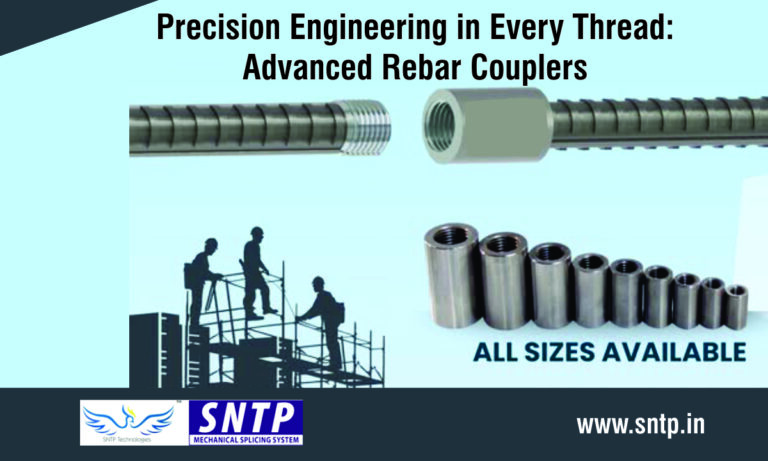
Rebar couplers offer a more advanced solution. These mechanical devices connect two reinforcing bars end-to-end, creating a direct load path without the need for overlapping lengths. The result is a compact, high-strength joint that improves structural performance while optimizing material use. As projects become more complex and demanding, the shift toward mechanical splicing has become increasingly evident.
The Role of Rebar Couplers in High-Rise Construction
High-rise buildings are engineering marvels that must withstand immense vertical loads, wind pressures, and dynamic forces. Structural integrity is critical, particularly in core walls, columns, and heavily reinforced zones where congestion can be a major issue.
Rebar couplers significantly reduce reinforcement congestion by eliminating lap lengths. This allows for better concrete flow and compaction, reducing the risk of voids or honeycombing. In tall structures where precision and load distribution are vital, mechanical couplers ensure uniform stress transfer across joints, enhancing the overall durability and stability of the building.
Additionally, high-rise projects operate under tight schedules. The use of couplers simplifies reinforcement placement, accelerates construction cycles, and reduces labor-intensive tying work. This efficiency helps contractors meet deadlines without compromising quality or safety.
Expanding into Infrastructure and Highway Projects
The application of rebar couplers extends far beyond vertical construction. In highways, bridges, flyovers, and tunnels, reinforcement systems must endure heavy traffic loads, environmental exposure, and long-term stress.
Bridges and elevated highways require continuous reinforcement across expansion joints and load-bearing sections. Mechanical couplers provide reliable connections that maintain structural continuity and strength. Their ability to perform under tension and compression makes them particularly valuable in infrastructure subjected to repetitive dynamic loads.
In precast infrastructure components, rebar couplers facilitate faster assembly and alignment on-site. Precast segments connected using couplers reduce installation time and improve quality control, which is crucial in large-scale highway development projects.
Improving Structural Performance and Safety
One of the primary advantages of rebar couplers is their ability to provide consistent load transfer. Unlike lap splices, which depend on concrete bonding and overlap length, mechanical couplers create a direct steel-to-steel connection. This ensures predictable structural performance and reduces dependency on surrounding concrete strength.
In seismic-prone regions, where buildings and infrastructure must absorb and dissipate energy during earthquakes, rebar couplers enhance resilience. Properly designed mechanical splices can meet stringent performance requirements, helping structures maintain integrity during extreme events.
Safety on construction sites is another critical consideration. Reduced congestion simplifies reinforcement placement and inspection, lowering the risk of installation errors. Streamlined processes also minimize on-site hazards associated with excessive steel handling.
Supporting Sustainable Construction Practices
Sustainability is a growing priority in global construction. From high-rise commercial towers to national highway networks, developers are seeking solutions that reduce environmental impact while maintaining structural excellence.
Rebar couplers contribute to sustainability in several ways:
- Reduced Steel Consumption: By eliminating overlap lengths, couplers decrease the total amount of reinforcement required.
- Lower Carbon Footprint: Reduced steel usage directly lowers emissions associated with steel production and transportation.
- Minimized Construction Waste: Mechanical connections produce less scrap and rework.
- Improved Durability: Stronger, more reliable joints extend the lifespan of structures, reducing long-term maintenance and material replacement.
These advantages align with green building initiatives and sustainable infrastructure goals worldwide.
Efficiency in Large-Scale Projects
Mega projects demand speed, coordination, and precision. Whether constructing a skyscraper skyline or expanding a national highway network, time and cost management are critical success factors.
Rebar couplers streamline reinforcement operations by:
- Simplifying bar alignment and connection
- Reducing manual labor requirements
- Enabling faster inspection and quality control
- Minimizing delays caused by reinforcement congestion
In large infrastructure corridors, where repetitive reinforcement patterns are common, couplers standardize connections and improve workflow efficiency. This consistency enhances overall project productivity.
Versatility Across Construction Methods
The expanding role of rebar couplers is also tied to their versatility. They are compatible with various reinforcement diameters and grades, making them suitable for residential buildings, commercial complexes, industrial plants, bridges, metro systems, and highways.
In precast and modular construction, couplers play an especially important role. As off-site fabrication becomes more prevalent, mechanical splicing ensures accurate and secure connections between prefabricated elements, supporting faster and more controlled assembly.
Addressing Modern Engineering Challenges
As urban development intensifies and infrastructure networks expand, engineers face increasing challenges related to space constraints, structural demands, and regulatory standards. Rebar couplers address these challenges by offering a compact, high-performance solution for reinforcement connections.
Their use is particularly beneficial in:
- Deep foundations and pile caps
- Core walls in tall buildings
- Heavy-load bridge piers
- Industrial structures requiring high tensile capacity
- Infrastructure exposed to harsh environmental conditions
By delivering strength, reliability, and efficiency, mechanical couplers help engineers meet modern performance expectations.
The Future of Reinforcement Technology
The expanding adoption of rebar couplers reflects a broader shift toward smarter construction technologies. As digital design tools, Building Information Modeling (BIM), and advanced quality control systems become standard practice, mechanical splicing aligns seamlessly with precision-driven workflows.
Future construction trends point toward greater use of automation, prefabrication, and sustainable materials. Rebar couplers support these innovations by simplifying reinforcement detailing and improving structural performance without increasing complexity.
From iconic high-rise towers shaping city skylines to extensive highway systems connecting regions, the role of rebar couplers continues to grow. Their ability to enhance strength, reduce waste, accelerate construction, and improve safety makes them indispensable in modern civil engineering.
Conclusion
From high-rises to highways, rebar couplers are transforming reinforced concrete construction. Their expanding role reflects the industry’s commitment to efficiency, sustainability, and structural excellence. By replacing traditional lap splicing with reliable mechanical connections, couplers deliver measurable advantages in material savings, performance, and speed.
As construction projects become larger, more complex, and more demanding, the need for innovative reinforcement solutions will only increase. Rebar couplers stand at the forefront of this evolution — strengthening the foundations of tomorrow’s buildings and infrastructure while shaping a smarter, more sustainable construction landscape.
Recent Posts




© Copyright 2017.SNTP All Rights Reserved.
Design & Developed By Star Web Maker