+91 9953 65 9594


Understanding Threaded Rebar Couplers: Features & Benefits
In reinforced concrete construction, the strength and continuity of reinforcement play a critical role in ensuring structural safety and performance. As projects become more complex and demanding, traditional methods like lap splicing are gradually being replaced by advanced mechanical solutions. Among these, threaded Rebar couplers stand out as one of the most efficient and reliable methods for connecting reinforcing bars. Designed with precision engineering and high-strength materials, threaded couplers offer superior performance, improved efficiency, and long-term durability across a wide range of construction applications.
What Are Threaded Rebar Couplers?
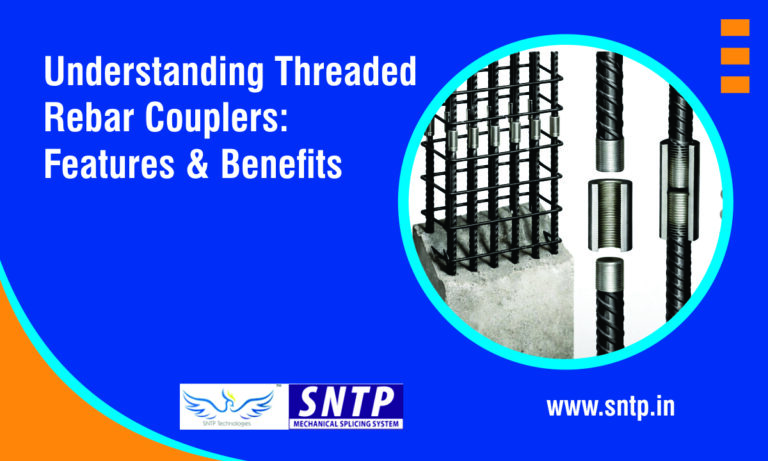
Threaded rebar couplers are mechanical connectors used to join two reinforcing bars end-to-end using a threaded system. The ends of the rebars are prepared by cutting or rolling threads, which are then screwed into the coupler to form a secure and continuous connection.
Unlike lap splicing, which relies on overlapping bars and bonding with concrete, threaded couplers provide a direct steel-to-steel connection. This ensures a more predictable load transfer mechanism and eliminates the need for extended overlap lengths. As a result, threaded couplers are widely used in high-performance structures where strength, precision, and reliability are essential.
Key Features of Threaded Rebar Couplers
1. Precision Threading
The most defining feature of threaded rebar couplers is their precision-engineered threading. Threads are manufactured to tight tolerances to ensure perfect alignment and full engagement between the rebar and the coupler. This precision guarantees consistent performance and minimizes the risk of connection failure.
Advanced threading techniques, such as parallel threading and tapered threading, are used depending on project requirements. These methods ensure that the coupler can handle high tensile loads while maintaining structural integrity.
2. High Tensile Strength
Threaded couplers are designed to meet or exceed the tensile strength of the reinforcing bar. This means that the connection is as strong as, or even stronger than, the parent material. This feature is crucial in applications where structural safety is a top priority, such as high-rise buildings, bridges, and industrial facilities.
3. Compact Design
One of the major advantages of threaded couplers is their compact size. By eliminating the need for overlapping bars, they significantly reduce reinforcement congestion. This compact design allows for better concrete flow and compaction, improving the overall quality of the structure.
4. Ease of Installation
Threaded rebar couplers are relatively easy to install compared to traditional methods. Once the threads are prepared, the bars can be quickly connected by simply screwing them into the coupler. This reduces manual labor and speeds up the construction process.
Additionally, the installation process is less dependent on workmanship quality, ensuring consistent results across different project sites.
5. Versatility
Threaded couplers are available in various sizes and configurations to suit different bar diameters and construction requirements. They can be used in vertical, horizontal, and inclined reinforcement systems, making them highly versatile.
Special types of threaded couplers, such as position couplers and transition couplers, are designed to handle specific challenges, including misalignment and varying bar sizes.
6. Quality Control and Testing
Manufacturers subject threaded rebar couplers to rigorous quality control processes, including tensile testing, dimensional checks, and material inspections. This ensures that each coupler meets industry standards and performs reliably under load.
Benefits of Threaded Rebar Couplers
1. Improved Structural Performance
Threaded rebar couplers provide a direct and continuous load path, ensuring efficient transfer of forces between reinforcing bars. This reduces stress concentrations and enhances the overall structural performance of the concrete element.
In seismic or high-load conditions, this reliability is particularly important, as it helps maintain structural integrity under dynamic forces.
2. Reduced Steel Consumption
By eliminating the need for lap splicing, threaded couplers significantly reduce the amount of steel required in a project. This not only lowers material costs but also contributes to more sustainable construction practices.
Reduced steel usage also means less weight in the structure, which can improve overall design efficiency.
3. Faster Construction
Time is a critical factor in modern construction projects. Threaded rebar couplers simplify the connection process, allowing for quicker assembly of reinforcement cages. This results in faster project completion and reduced labor costs.
In large-scale projects, these time savings can have a significant impact on overall productivity.
4. Enhanced Site Safety
Construction sites can be hazardous, especially when dealing with heavy reinforcement materials. Threaded couplers reduce the need for excessive handling and tying of rebars, minimizing potential risks.
Simplified installation processes also reduce the chances of errors, contributing to a safer working environment.
5. Better Concrete Quality
Reduced reinforcement congestion allows concrete to flow more freely around the bars, ensuring proper compaction and bonding. This minimizes the risk of voids, honeycombing, and other defects that can compromise structural integrity.
Improved concrete quality leads to stronger and more durable structures.
6. Cost Efficiency
While the initial cost of threaded couplers may be higher than traditional lap splicing, the overall project cost is often lower. Savings in steel, labor, and time offset the upfront investment, making threaded couplers a cost-effective solution in the long run.
Additionally, improved durability reduces maintenance and repair costs over the structure’s lifespan.
7. Sustainability Advantages
Threaded rebar couplers contribute to environmentally responsible construction by reducing material waste and lowering carbon emissions associated with steel production. Their efficient design supports green building practices and sustainable infrastructure development.
8. Compatibility with Modern Construction Techniques
As construction methods evolve, threaded couplers are increasingly used in precast and modular construction. Their precision and reliability make them ideal for connecting prefabricated elements, ensuring accurate alignment and strong joints.
They also integrate well with digital design tools and Building Information Modeling (BIM), supporting advanced planning and execution.
Applications of Threaded Rebar Couplers
Threaded rebar couplers are widely used across various types of construction projects, including:
- High-rise buildings
- Bridges and flyovers
- Metro and railway infrastructure
- Industrial plants
- Dams and water-retaining structures
- Tunnels and underground construction
Their adaptability and performance make them suitable for both small-scale and large-scale projects.
Future Outlook
The demand for threaded rebar couplers is expected to grow as the construction industry continues to prioritize efficiency, sustainability, and high-performance materials. Innovations in manufacturing technology and material science are likely to further enhance the capabilities of these couplers.
With increasing adoption in global markets, threaded couplers are set to become a standard component in modern reinforcement practices.
Conclusion
Threaded rebar couplers represent a significant advancement in reinforcement technology. With their precision-engineered design, high strength, and numerous practical benefits, they offer a superior alternative to traditional lap splicing methods.
From improving structural performance and reducing material usage to accelerating construction and supporting sustainability, threaded couplers deliver value at every stage of a project. As construction demands continue to evolve, these advanced mechanical connectors will play a crucial role in shaping the future of infrastructure development — providing strength, efficiency, and reliability in every connection.
Recent Posts



© Copyright 2017.SNTP All Rights Reserved.
Design & Developed By Star Web Maker