+91 9953 65 9594


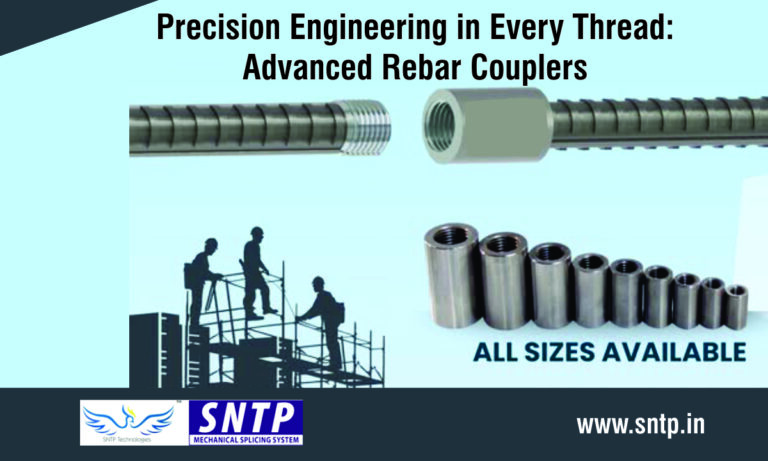
Precision Engineering in Every Thread: Advanced Rebar Couplers
In modern construction, strength alone is not enough. Today’s infrastructure demands precision, efficiency, durability, and sustainability — all working together to create structures that stand the test of time. At the center of this evolution lies a small yet powerful component: the advanced Rebar coupler. Designed with meticulous engineering and manufactured with tight tolerances, Rebar Couplers represent the perfect combination of structural performance and precision craftsmanship.
From high-rise buildings and bridges to industrial facilities and transportation corridors, advanced mechanical splicing systems are redefining how reinforcement bars are connected. Precision engineering in every thread ensures that these couplers deliver reliable load transfer, consistent performance, and long-term durability across diverse construction environments.
The Science Behind Mechanical Splicing
Reinforced concrete structures rely on steel rebars to resist tensile forces. Traditionally, these rebars were connected using lap splicing — a method requiring overlapping bars over a calculated length. While functional, lap splicing increases steel consumption, creates congestion in heavily reinforced zones, and introduces variability depending on workmanship and concrete quality.
Advanced rebar couplers eliminate these challenges by creating a direct mechanical connection between two reinforcing bars. Using threaded systems or other precision-machined designs, couplers join bars end-to-end, forming a continuous reinforcement path. This steel-to-steel connection ensures predictable structural performance and reduces reliance on overlapping lengths.
The key to their effectiveness lies in engineering accuracy. Each thread is carefully manufactured to maintain dimensional consistency, alignment, and torque capacity. This precision ensures full engagement between the coupler and reinforcing bar, maximizing strength and minimizing risk of failure.
Engineering Accuracy and Load Transfer
Precision engineering directly impacts how loads are transferred across reinforcement joints. In structural systems, forces must move seamlessly from one rebar to another without stress concentration or slippage. Advanced couplers are designed to meet or exceed the tensile strength of the parent bar, ensuring that the connection performs as strongly as the reinforcement itself.
High-quality threading ensures uniform stress distribution along the joint. When properly installed, the connection eliminates weak zones, providing superior performance under tension, compression, and cyclic loading conditions. This reliability is critical in applications such as:
- High-rise core walls
- Bridge piers and decks
- Industrial foundations
- Seismic-resistant structures
- Heavy-load infrastructure
In these demanding environments, precision is not optional — it is essential.
Reducing Reinforcement Congestion
As structures become taller and more complex, reinforcement congestion becomes a significant challenge. Columns, beams, and shear walls often require dense steel arrangements to handle heavy loads. Overlapping bars through traditional lap splicing increases congestion, making concrete placement and compaction difficult.
Advanced rebar couplers provide a compact solution. By eliminating long overlap lengths, they reduce steel density in critical zones, improving workability and ensuring better concrete flow. This not only enhances structural integrity but also improves construction efficiency and inspection accuracy.
The result is cleaner reinforcement detailing and improved constructability — a major advantage for large-scale projects where precision and speed are equally important.
Efficiency in Modern Construction
Construction timelines are shrinking as developers push for faster project delivery. Mechanical rebar couplers streamline reinforcement installation by simplifying connections and reducing manual tying work. Workers can quickly align and secure threaded bars, saving valuable time during reinforcement placement.
Precision manufacturing further supports efficiency by ensuring consistent fit and performance across every connection. Reduced rework, fewer alignment issues, and simplified inspections contribute to smoother workflows and predictable outcomes.
In precast and modular construction, where components are fabricated off-site and assembled on-site, couplers play a critical role. They enable accurate alignment between prefabricated elements, ensuring strong and secure joints while maintaining dimensional precision.
Durability and Long-Term Performance
Durability is a cornerstone of modern infrastructure. Structures must endure environmental exposure, heavy traffic loads, temperature variations, and in some regions, seismic activity. Precision-engineered rebar couplers are built to withstand these challenges.
High-quality materials and controlled manufacturing processes ensure resistance to corrosion, wear, and mechanical stress. Proper threading minimizes gaps or misalignment that could compromise performance over time. By creating a secure mechanical bond, couplers reduce the likelihood of structural weakness at reinforcement joints.
This long-term reliability reduces maintenance costs and extends the lifespan of structures — an important factor in sustainable infrastructure development.
Supporting Sustainable Construction
Sustainability is no longer an option; it is a responsibility. Advanced rebar couplers contribute to greener construction practices in several measurable ways.
First, they significantly reduce steel consumption by eliminating the need for extended overlap lengths. Less steel means lower carbon emissions associated with production and transportation.
Second, compact reinforcement layouts reduce waste and improve material efficiency. Precision connections minimize errors and rework, further lowering environmental impact.
Third, improved durability ensures that structures require fewer repairs and replacements over their lifetime. This extended service life supports resource conservation and reduces long-term environmental strain.
By combining structural strength with material efficiency, advanced couplers align with global sustainability goals and modern green building standards.
Meeting High Performance Standards
Modern engineering projects operate under strict performance and safety standards. Precision-engineered rebar couplers are manufactured to meet rigorous quality control requirements, ensuring consistent strength and dimensional accuracy.
Testing procedures often include tensile strength verification, fatigue testing, and dimensional inspections. These quality assurance measures guarantee that every coupler performs as intended under demanding conditions.
For engineers and project managers, this reliability provides confidence that reinforcement connections will meet design specifications and regulatory requirements.
Versatility Across Applications
One of the defining characteristics of advanced rebar couplers is their adaptability. They are compatible with various bar diameters and grades, making them suitable for a wide range of construction applications:
- Residential and commercial buildings
- Industrial facilities
- Transportation infrastructure
- Bridges and flyovers
- Dams and water-retaining structures
- Metro and tunnel systems
Their versatility allows engineers to standardize reinforcement practices across multiple project types, improving efficiency and consistency.
The Future of Reinforcement Technology
As construction technologies continue to evolve, precision engineering will play an even greater role in structural design. Digital modeling tools and Building Information Modeling (BIM) systems require accurate detailing and predictable component performance. Advanced rebar couplers integrate seamlessly into these workflows, supporting data-driven construction planning.
Automation, prefabrication, and smart construction techniques further highlight the importance of standardized mechanical splicing solutions. Precision threads, reliable torque engagement, and consistent manufacturing tolerances make couplers a natural fit for next-generation building practices.
Conclusion
Precision engineering in every thread is more than a manufacturing philosophy — it is the foundation of structural reliability. Advanced rebar couplers embody this principle by delivering consistent load transfer, reduced material usage, improved constructability, and long-term durability.
From high-rise towers and industrial plants to highways and bridges, these compact yet powerful components are transforming reinforcement practices. By combining engineering accuracy with practical efficiency, advanced rebar couplers provide a smarter, stronger solution for modern construction challenges.
As the industry moves toward faster, greener, and more resilient building methods, precision-engineered mechanical splicing systems will remain at the forefront — reinforcing the world’s most ambitious structures with strength, reliability, and innovation in every connection.
Recent Posts



© Copyright 2017.SNTP All Rights Reserved.
Design & Developed By Star Web Maker