+91 9953 65 9594


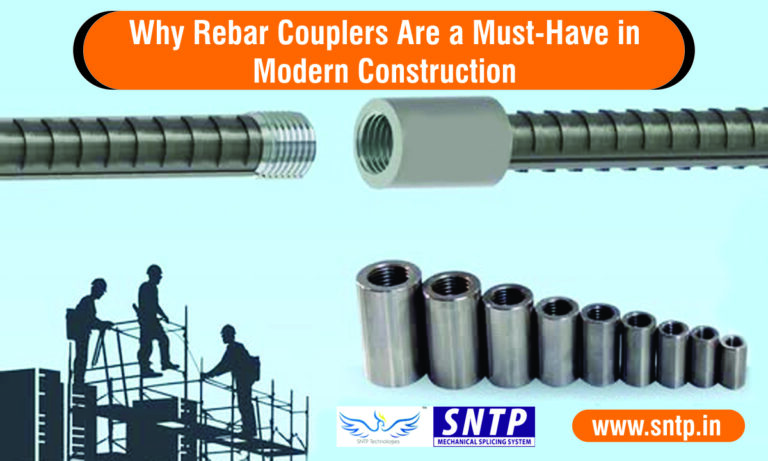
Why Rebar Couplers Are a Must-Have in Modern Construction
The construction industry is evolving rapidly, driven by the need for stronger structures, faster project execution, cost efficiency, and sustainable practices. As buildings grow taller and infrastructure projects become more complex, traditional reinforcement methods are no longer sufficient to meet modern demands. One innovation that has transformed reinforced concrete construction is the use of Rebar couplers. These mechanical connectors have become a must-have in modern construction due to their ability to enhance structural performance, reduce material usage, and improve overall efficiency.
Understanding Rebar Couplers
Rebar couplers are mechanical devices used to connect two reinforcing bars end-to-end, creating a continuous load path within a concrete structure. Unlike traditional lap splicing, which requires overlapping bars, couplers provide a direct steel-to-steel connection. This eliminates the need for extra reinforcement length and ensures consistent load transfer across joints.
Available in various types such as threaded couplers, position couplers, and transition couplers, these systems are designed to meet different construction requirements. Their adaptability and reliability make them suitable for a wide range of applications, from residential buildings to large-scale infrastructure projects.
Overcoming the Limitations of Traditional Methods
For decades, lap splicing has been the standard method for connecting rebars. While it is simple and widely used, it presents several challenges in modern construction:
- Increased steel consumption due to overlapping lengths
- Reinforcement congestion in critical structural zones
- Dependence on concrete quality for load transfer
- Time-consuming installation
- Risk of human error
As construction projects become more demanding, these limitations can affect both performance and efficiency. Rebar couplers address these issues by offering a more advanced and reliable solution.
Enhancing Structural Strength and Performance
One of the primary reasons rebar couplers are essential in modern construction is their ability to improve structural performance. Mechanical couplers provide a direct connection between reinforcement bars, ensuring efficient transfer of tensile and compressive forces.
Unlike lap splicing, which relies on the bond between steel and concrete, couplers create a continuous reinforcement path. This reduces stress concentration and enhances the overall strength of the structure. In high-rise buildings, bridges, and seismic-prone areas, this level of reliability is critical.
Additionally, high-quality couplers are designed to meet or exceed the tensile strength of the parent rebar, ensuring that the joint is as strong as the reinforcement itself.
Reducing Steel Consumption and Cost
Material efficiency is a major concern in modern construction. Steel is one of the most expensive and resource-intensive components of reinforced concrete structures. By eliminating the need for overlap lengths, rebar couplers significantly reduce steel usage.
This reduction leads to:
- Lower material costs
- Reduced transportation and handling expenses
- Decreased project weight
In large-scale projects, even a small percentage reduction in steel consumption can result in substantial cost savings. This makes rebar couplers not only a technical improvement but also a financially smart choice.
Improving Construction Speed and Efficiency
Time is a critical factor in today’s construction industry. Delays can lead to increased costs and missed deadlines. Rebar couplers help accelerate construction by simplifying the reinforcement process.
Instead of cutting, bending, and tying overlapping bars, workers can quickly connect rebars using mechanical couplers. This reduces labor requirements and speeds up installation.
Faster reinforcement placement leads to:
- Shorter construction timelines
- Improved project scheduling
- Higher productivity
In fast-track projects such as metro rail systems, commercial complexes, and infrastructure developments, these time savings are invaluable.
Reducing Reinforcement Congestion
In heavily reinforced structures, such as columns, beams, and shear walls, congestion can become a serious issue. Overlapping bars create dense reinforcement zones, making it difficult for concrete to flow and compact properly.
Poor compaction can result in defects such as voids and honeycombing, which weaken the structure.
Rebar couplers eliminate this problem by removing the need for overlaps. This creates more space within the reinforcement cage, allowing for better concrete placement and compaction. The result is improved structural quality and durability.
Enhancing Site Safety
Safety is a top priority on construction sites. Handling large quantities of steel and working in congested areas can increase the risk of accidents.
Rebar couplers contribute to a safer working environment by:
- Reducing the amount of steel handling
- Simplifying installation processes
- Minimizing congestion in work areas
With fewer manual operations and standardized connections, the likelihood of errors and accidents is significantly reduced.
Supporting Sustainable Construction
Sustainability is becoming a key focus in the construction industry. Developers and governments are increasingly prioritizing eco-friendly building practices.
Rebar couplers support sustainability in several ways:
- Reduced Steel Usage: Lower material consumption decreases carbon emissions from steel production.
- Minimized Waste: Fewer offcuts and rework reduce construction waste.
- Improved Durability: Stronger connections extend the lifespan of structures, reducing the need for repairs.
- Efficient Resource Utilization: Optimized reinforcement design conserves resources.
These benefits align with global sustainability goals and green building standards, making rebar couplers an environmentally responsible choice.
Versatility Across Applications
Rebar couplers are highly versatile and can be used in a wide range of construction projects, including:
- High-rise buildings
- Bridges and flyovers
- Metro and railway systems
- Industrial plants
- Dams and tunnels
They are also widely used in precast and modular construction, where components are manufactured off-site and assembled on-site. Couplers ensure accurate alignment and strong connections between prefabricated elements.
Meeting Modern Engineering Standards
Today’s construction projects are governed by strict quality and performance standards. Rebar couplers are designed to meet these requirements through rigorous testing and quality control.
Manufacturers conduct tests for tensile strength, fatigue resistance, and dimensional accuracy to ensure consistent performance. Certified couplers provide confidence to engineers and contractors that reinforcement connections will meet design specifications.
The Future of Reinforcement Technology
As construction technology continues to advance, the demand for efficient and reliable reinforcement solutions will grow. Digital tools such as Building Information Modeling (BIM) require precise detailing and predictable performance, which mechanical couplers can provide.
Innovations in manufacturing and material science are further enhancing the capabilities of rebar couplers, making them even more efficient and durable.
With increasing adoption worldwide, rebar couplers are set to become a standard component in modern construction practices.
Conclusion
Rebar couplers have become an essential part of modern construction due to their ability to overcome the limitations of traditional splicing methods. By providing stronger connections, reducing material usage, improving efficiency, and supporting sustainability, they offer a comprehensive solution for today’s construction challenges.
As projects continue to grow in scale and complexity, the need for reliable and efficient reinforcement systems will only increase. Rebar couplers not only meet these demands but also set new standards for performance and innovation.
In a world where strength, speed, and sustainability are key, rebar couplers are no longer optional — they are a must-have for building the future of infrastructure.
Recent Posts



© Copyright 2017.SNTP All Rights Reserved.
Design & Developed By Star Web Maker