+91 9953 65 9594


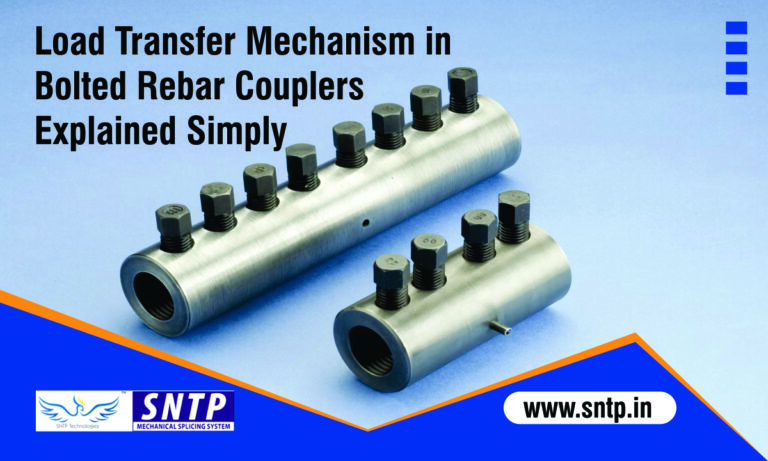
Load Transfer Mechanism in Bolted Rebar Couplers Explained Simply
In reinforced concrete construction, ensuring a strong and continuous connection between rebars is essential for structural safety. Traditionally, lapping was used to join reinforcement bars, but modern construction now relies heavily on mechanical splicing systems like Bolted rebar couplers. These couplers are especially useful in situations where threading is not possible or practical.
But one question often comes up on site: How exactly do bolted rebar couplers transfer load between two bars?
Understanding this mechanism is key to proper installation and confident use in critical structures.
Let’s break it down in a simple and practical way.
What Is a Bolted Rebar Coupler?
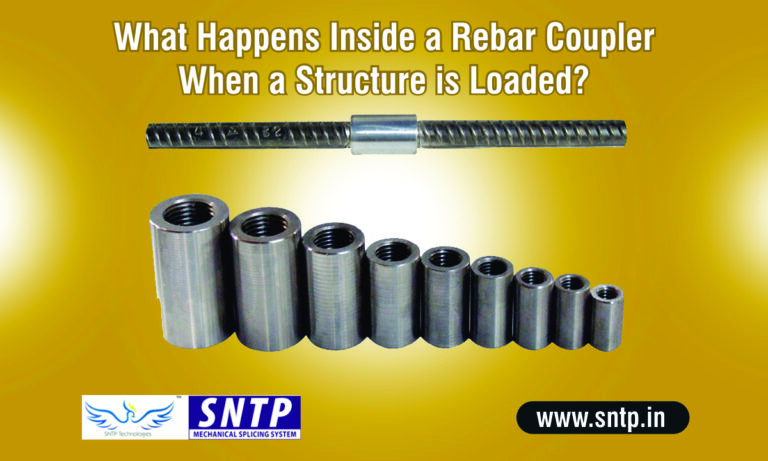
A bolted rebar coupler is a mechanical device used to connect two reinforcement bars without threading. It consists of:
- A hollow steel sleeve
- High-strength bolts (usually shear bolts or locking bolts)
- Internal serrations or gripping surfaces (in some designs)
The rebars are inserted into the sleeve from both ends, and the bolts are tightened to hold them firmly in place.
Why Load Transfer Matters
In any RCC structure, loads such as tension, compression, and bending forces travel through the reinforcement bars. When two bars are joined, the connection must:
- Transfer the load completely
- Maintain strength continuity
- Prevent slippage or failure
If the joint is weak, the entire structure can be at risk. That’s why understanding load transfer in bolted couplers is so important.
Basic Principle of Load Transfer in Bolted Couplers
The load transfer in bolted rebar couplers happens through a combination of mechanical grip and friction.
Here’s the simple concept:
👉 The bolts press the rebar tightly against the inner surface of the coupler
👉 This creates a strong grip and frictional resistance
👉 When load is applied, the force is transferred from one bar → to the coupler → to the other bar
Unlike lapping (which depends on concrete bond), bolted couplers rely on direct mechanical action.
Step-by-Step Load Transfer Process
1. Bar Insertion
Both rebars are inserted into the coupler from opposite ends. The bars are aligned properly to ensure even contact inside the sleeve.
2. Bolt Tightening
The bolts are tightened using a spanner or torque wrench. In shear bolt systems, the bolt head breaks off automatically when the correct torque is achieved.
This step is critical because:
- It ensures proper gripping force
- It eliminates guesswork in tightening
3. Creation of Clamping Force
As the bolts tighten, they push against the rebar surface, generating radial pressure. This pressure creates:
- Strong friction between rebar and coupler
- Mechanical interlocking (in some designs)
This is the main force that holds the bars together.
4. Load Application
When a load is applied (tension or compression):
- The first bar tries to move
- The coupler resists this movement due to friction and grip
- The force is transferred through the coupler body
- The second bar receives the load
5. Continuous Load Path
The coupler ensures that the load path remains continuous, just like a single uninterrupted rebar.
Types of Forces Handled by Bolted Couplers
1. Tensile Forces
When the structure is under tension:
- The bars try to pull apart
- The bolts prevent slippage
- Friction and grip transfer the force safely
2. Compressive Forces
Under compression:
- The bars push against each other inside the coupler
- The sleeve supports and distributes the load evenly
3. Cyclic and Dynamic Loads
In conditions like vibration or seismic activity:
- The tight bolt grip prevents repeated slipping
- The joint remains stable under load reversals
Why Proper Bolt Tightening Is Critical
The entire load transfer mechanism depends on correct bolt tightening.
If bolts are:
- Under-tightened:
→ Weak grip
→ Slippage risk
→ Joint failure - Over-tightened (in non-shear systems):
→ Bolt damage
→ Uneven pressure
That’s why many systems use shear bolts, which automatically break at the correct torque level. This ensures:
- Consistent installation
- Reliable load transfer
- Reduced human error
Advantages of This Load Transfer Mechanism
1. No Dependency on Concrete
Unlike lapping, bolted couplers do not rely on concrete bond. Even if the surrounding concrete cracks, the joint remains strong.
2. Immediate Strength
The connection becomes effective as soon as the bolts are tightened. No curing or waiting time is required.
3. Ideal for Difficult Conditions
Bolted couplers work well in:
- Repair and retrofitting projects
- Congested reinforcement zones
- Sites where threading machines are not available
4. Reliable Performance
Because the system is mechanical, it provides predictable and consistent performance when installed correctly.
Common Mistakes That Affect Load Transfer
Even though the mechanism is simple, mistakes can reduce efficiency:
- Improper bar alignment
- Dirty or rusted rebar surfaces
- Incorrect bolt tightening
- Using damaged or low-quality couplers
- Not inserting bars to the required depth
Avoiding these ensures maximum strength and safety.
Real-World Example (Simple Explanation)
Think of a bolted coupler like a strong clamp holding two rods together.
- If the clamp is loose → rods slip
- If the clamp is tight → rods act like one piece
Similarly:
- The bolts act as the tightening force
- The coupler acts as the clamp body
- The rebars act as the rods
When tightened properly, the system behaves like a continuous bar.
Conclusion
The load transfer mechanism in bolted rebar couplers is simple yet highly effective. By using bolt-induced pressure and friction, these couplers create a strong mechanical connection that ensures smooth load flow from one bar to another.
They eliminate the limitations of traditional methods and provide a reliable solution for modern construction challenges—especially where threading is not feasible.
When installed correctly, bolted rebar couplers deliver:
- Strong and consistent load transfer
- High resistance to slippage
- Reliable performance under various loading conditions
In today’s fast-paced construction environment, understanding this mechanism helps engineers and contractors make better decisions and build safer, stronger structures.
Recent Posts


© Copyright 2017.SNTP All Rights Reserved.
Design & Developed By Star Web Maker