+91 9953 65 9594



Lessons Learned from Large Projects Using Rebar Couplers
Large-scale construction projects—such as high-rise towers, metro rail systems, bridges, power plants, and industrial complexes—demand precision, strength, and efficiency at every stage. In these projects, even small inefficiencies can lead to major cost overruns, delays, or safety concerns. Over the last decade, Rebar couplers have emerged as a preferred reinforcement connection method in such complex structures. Their use in large projects has provided valuable insights that are shaping the future of RCC construction.
Based on real-world implementation across infrastructure and mega-building projects, here are the key lessons learned from large projects using rebar couplers.
Lesson 1: Early Planning Makes a Major Difference
One of the most important lessons from large projects is that rebar couplers must be planned at the design stage, not treated as an on-site alternative to lapping.
Projects that integrated couplers early in:
- Structural drawings
- Bar bending schedules (BBS)
- Construction sequencing
experienced smoother execution and fewer site-level changes. In contrast, projects that introduced couplers late often faced coordination issues, incorrect bar lengths, and rework.
Key takeaway: Early coordination between structural consultants, contractors, and coupler suppliers is essential for success.
Lesson 2: Rebar Couplers Dramatically Reduce Congestion
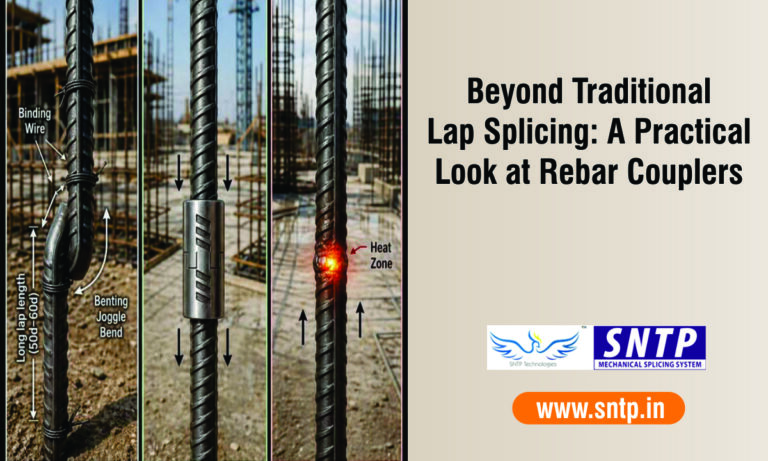
High-rise columns, shear walls, and transfer beams are notorious for reinforcement congestion—especially when large-diameter bars are lapped. Large projects using rebar couplers consistently reported:
- Cleaner reinforcement cages
- Improved concrete flow
- Easier vibration and compaction
- Reduced honeycombing
This was particularly evident in:
- Core walls of towers
- Basement columns
- Pile caps and raft foundations
Key takeaway: Couplers are not just connectors; they improve the overall constructability of RCC structures.
Lesson 3: Steel Savings Are Significant at Scale
While couplers may appear costlier per unit, large projects revealed that steel savings at scale are substantial.
By eliminating long lap lengths, projects achieved:
- Reduced steel consumption
- Lower transportation and handling costs
- Optimized bar cutting and wastage control
In mega projects with thousands of joints, these savings often offset the initial cost of couplers and resulted in overall budget optimization.
Key takeaway: In large projects, couplers are economically advantageous when evaluated holistically.
Lesson 4: Quality Control Is Non-Negotiable
Another critical lesson learned is the importance of strict quality control procedures. Large projects that achieved the best results followed:
- Mandatory threading accuracy checks
- Batch-wise coupler testing
- On-site torque and pull-out tests
- Documentation and traceability of each batch
Where quality checks were skipped or relaxed, issues such as improper threading or incomplete engagement surfaced.
Key takeaway: Rebar couplers demand discipline—quality assurance is just as important as installation.
Lesson 5: Skilled Labor Improves Speed and Accuracy
Large projects using trained technicians and supervisors for coupler installation experienced:
- Faster construction cycles
- Fewer errors and rework
- Consistent joint performance
On the other hand, projects relying on untrained labor faced delays due to incorrect threading and misalignment.
Many successful projects partnered with coupler manufacturers to conduct site-level training programs, which significantly improved productivity.
Key takeaway: Investing in training pays off in both speed and safety.
Lesson 6: Couplers Perform Better Under High Loads
In large-scale structures where heavy loads and dynamic forces are involved, rebar couplers demonstrated superior performance compared to lapped joints.
Field data and testing from projects such as:
- Long-span bridges
- Industrial foundations
- Seismic-zone buildings
showed that mechanical splices provided:
- Reliable load transfer
- Consistent tensile strength
- Improved performance under vibration and seismic stress
Key takeaway: Couplers are better suited for modern, high-load RCC designs.
Lesson 7: Faster Floor Cycles Improve Project Timelines
Large projects are extremely time-sensitive. One of the most noticeable benefits of rebar couplers was the reduction in floor-to-floor cycle time, especially in high-rise construction.
With couplers:
- Reinforcement work became more organized
- No extra time spent tying long lap lengths
- Vertical bar continuity became easier
This led to faster repetition of construction cycles and earlier project completion.
Key takeaway: Couplers directly contribute to faster project delivery.
Lesson 8: Design Flexibility Increases
Large projects often undergo design changes due to architectural, structural, or site conditions. Rebar couplers offered greater flexibility by allowing:
- Bar continuity across construction joints
- Easy extension of reinforcement
- Better adaptation to phased construction
This flexibility proved extremely valuable in projects with complex sequencing or future expansion plans.
Key takeaway: Couplers support adaptable and future-ready construction.
Lesson 9: Documentation Builds Confidence
Mega projects involve multiple stakeholders—consultants, auditors, government authorities, and quality inspectors. Projects that maintained:
- Installation records
- Test certificates
- Compliance documents
faced fewer approval delays and smoother inspections.
Rebar couplers, when properly documented, helped build trust in structural safety and compliance.
Key takeaway: Transparent documentation strengthens project credibility.
Lesson 10: Sustainability Benefits Are Real
Large projects are increasingly evaluated on sustainability parameters. Rebar couplers contributed positively by:
- Reducing steel consumption
- Lowering carbon footprint
- Minimizing construction waste
- Supporting green building goals
These benefits aligned well with modern environmental standards and sustainability certifications.
Key takeaway: Couplers support eco-efficient construction at scale.
Conclusion
The experience from large projects clearly shows that rebar couplers are more than a replacement for lapping—they are a strategic construction solution. When planned early, installed correctly, and supported by quality control and skilled labor, couplers deliver measurable improvements in strength, efficiency, speed, and sustainability.
The lessons learned highlight that the true value of rebar couplers lies in their ability to simplify complex construction challenges while enhancing structural performance. As large-scale and high-rise projects continue to dominate the construction landscape, rebar couplers will remain a critical component of modern RCC construction.
Recent Posts




© Copyright 2017.SNTP All Rights Reserved.
Design & Developed By Star Web Maker