+91 9953 65 9594


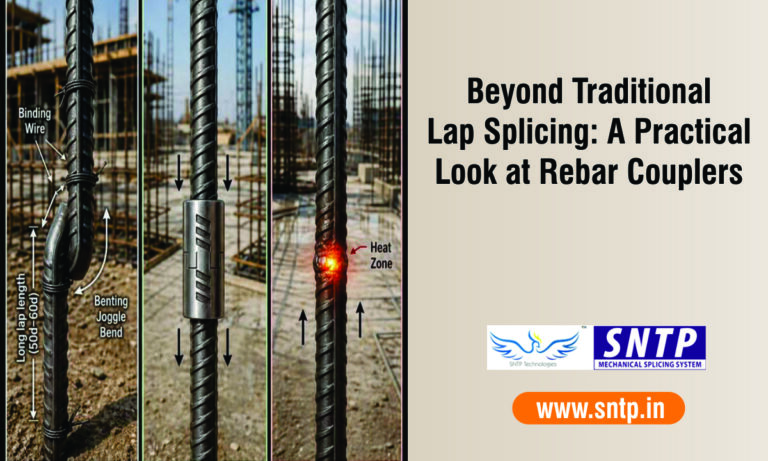
Beyond Traditional Lap Splicing: A Practical Look at Rebar Couplers
Reinforced concrete construction has relied on lap splicing for many years. It is a familiar method, easy for site teams to understand, and suitable for many regular reinforcement applications. But construction projects are changing. Buildings are getting taller, structural members are becoming more heavily reinforced, and working space on busy sites is often limited.
In such situations, joining reinforcement bars can become more complicated than it looks.
This is where Rebar Couplers can offer a practical alternative. Instead of overlapping two bars over a certain length, a mechanical coupler connects them at a specific point. This can help reduce congestion and make reinforcement detailing more manageable.
But using a coupler is not simply about replacing lap splices. Engineers need to consider the type of structure, bar diameter, loading conditions, installation process, inspection requirements, and applicable standards before choosing a connection method.
Why Lap Splicing Can Become Difficult on Modern Projects
Lap splicing works on a simple principle: two reinforcement bars overlap for a specified length so that the required force can be transferred between them.
The method is well established, but the amount of overlapping reinforcement can become a problem in heavily reinforced areas.
For example, a large column may contain many vertical bars with closely spaced ties. Adding long lap lengths can put even more steel into the same region. The result can be a congested reinforcement cage that is harder to install and inspect.
The same issue can arise in foundations, shear walls, bridge elements, and other structural members where reinforcement is concentrated.
This is one of the situations where mechanical splicing starts to make practical sense.
What Makes Rebar Couplers Different?
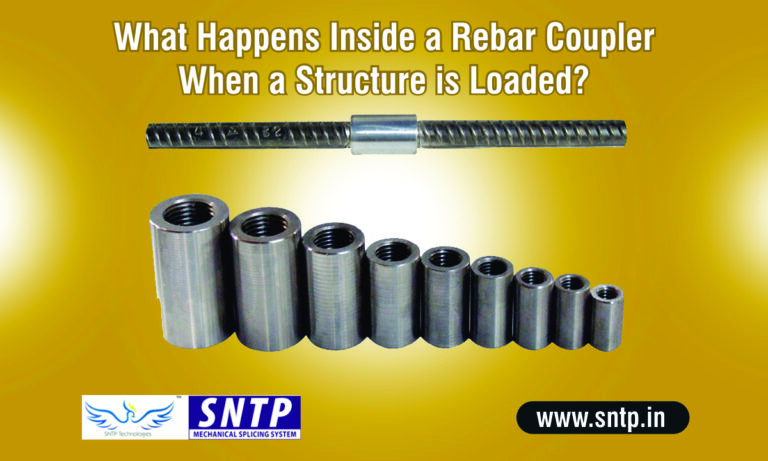
A mechanical coupler joins two reinforcement bars through a specially designed connection.
Depending on the system, the connection may use threads, bolts, or another mechanical arrangement. The exact installation process varies between products, but the basic purpose is the same: transfer the required force from one reinforcement bar to the other.
Because the bars are connected at a defined point, the long overlapping region associated with a lap splice can be avoided.
That can make a noticeable difference when space is limited.
It also gives engineers another option when planning reinforcement for complicated structural elements.
Reducing Reinforcement Congestion
One of the biggest practical reasons for using Rebar Couplers is to control reinforcement congestion.
When several bars are lapped in one location, they occupy additional space. This can make it harder for workers to position reinforcement correctly and for inspectors to access the cage.
A mechanical connection can reduce the amount of overlapping steel around the connection.
This does not mean the reinforcement automatically becomes easy to install. There may still be a large number of bars in the area. However, reducing unnecessary overlap can give the site team more room to work.
It can also help create a cleaner reinforcement arrangement around critical structural zones.
Large-Diameter Bars Are an Important Consideration
Lap splicing can become particularly demanding when large-diameter reinforcement is used.
As bar size increases, the required lap arrangement may occupy considerable space. In a heavily reinforced structural member, this can create practical difficulties.
Mechanical splicing can provide an alternative by connecting the bars without relying on the same overlapping arrangement.
This is one reason couplers are often considered for large columns, foundations, bridge structures, and other projects where reinforcement congestion is a concern.
The decision still needs to come from the structural design rather than simply from the bar diameter.
Installation Is Different From Traditional Lapping
A common mistake is to assume that installing a coupler is as simple as putting two bars into a connector.
Every coupler system has its own installation requirements.
For a threaded connection, the bar ends need to be prepared correctly and the required thread engagement needs to be achieved.
For a bolted connection, the bars need to be inserted correctly and the bolts installed according to the specified procedure.
Workers need to understand these requirements before starting installation. A connection that is not installed correctly may not deliver the performance expected from the tested product.
Proper training and supervision therefore remain important.
Inspection of Mechanical Connections
Reinforcement inspection is another area where mechanical splicing can provide a practical benefit.
With a traditional lap splice, the inspector needs to check the overlapping bars and confirm that the required arrangement has been followed.
With a mechanical connection, there is a clearly defined component that can be identified and checked.
Depending on the coupler system, inspection may include:
- Correct bar diameter
- Correct coupler type
- Bar insertion
- Thread engagement
- Bolt installation
- Alignment
- Coupler condition
- Installation records
The exact inspection procedure should follow the manufacturer's instructions and project requirements.
A visual check alone should not be considered sufficient when the connection has specific installation criteria.
How Couplers Can Help in Congested Areas
Some parts of a structure naturally contain more reinforcement than others.
Beam-column joints, foundations, shear walls, transfer structures, and heavily reinforced columns can all present difficult working conditions.
In these areas, reducing lap lengths can free up useful space.
This can help workers move around the reinforcement cage and may also make it easier for inspectors to see individual bars.
There is another benefit during concrete placement. When reinforcement is extremely congested, concrete needs sufficient space to flow around the bars and properly fill the member.
Reducing unnecessary reinforcement overlap can help with detailing, although concrete placement still needs to be properly planned and controlled.
Does Using Couplers Save Steel?
This is a common question, but the answer depends on the project.
A lap splice requires additional bar length to create the overlap. Mechanical splicing does not use the same type of overlap.
This means there may be an opportunity to reduce reinforcement used specifically for laps.
However, the overall cost and material benefit depends on several factors, including coupler price, reinforcement quantity, bar diameter, labour, installation equipment, and project scale.
So it is better to compare the complete connection cost rather than assuming that couplers are automatically cheaper.
Structural Performance Should Come First
Cost and installation speed are important, but the primary concern is structural performance.
A mechanical connection must be capable of transferring the forces required by the structural design.
Depending on the application, engineers may need information about tensile strength, slip, ductility, cyclic loading, or fatigue performance.
This becomes especially important for structures that experience repeated or changing loads.
The selected product should therefore have appropriate technical documentation and testing evidence for its intended use.
Rebar Couplers Are Not All the Same
There are different types of mechanical reinforcement connections, and they do not all work in the same way.
Threaded couplers, bolted couplers, and other systems have different installation procedures and performance characteristics.
Even products designed for the same reinforcement diameter can differ in their construction, materials, connection mechanism, and testing requirements.
For this reason, engineers should avoid choosing a coupler based only on its size or general description.
The actual product needs to be evaluated against the project's requirements.
Where Rebar Couplers Can Be Useful
Mechanical splicing can be considered in a wide range of RCC applications.
These may include:
- High-rise buildings
- Bridges
- Metro and infrastructure projects
- Deep foundations
- Shear walls
- Industrial structures
- Heavily reinforced columns
- Large RCC structures
The reason for using a coupler can be different from one project to another.
In one project, the main concern may be congestion. In another, it may be limited working space or the need to maintain reinforcement continuity in a particular location.
Standards and Quality Checks Matter
Selecting a mechanical connection should always be supported by proper engineering and quality control.
In India, mechanical reinforcement couplers are covered by IS 16172. Project teams should refer to the applicable requirements and ensure that the selected system meets the specifications relevant to the intended application.
Quality control should cover the entire process.
That includes checking the product when it arrives at the site, storing it properly, installing it according to instructions, inspecting completed connections, and maintaining relevant records.
This approach helps prevent small installation issues from becoming larger construction problems.
When Is a Coupler a Better Choice Than a Lap?
There is no single answer for every project.
Lap splicing may remain the simplest solution for many conventional reinforcement arrangements.
A coupler may become more useful when the project has:
- Heavy reinforcement congestion
- Large-diameter bars
- Limited space
- Difficult reinforcement detailing
- Repeated connection requirements
- Structural areas where long laps are inconvenient
The choice should be made during the design and planning stage whenever possible.
This gives engineers enough time to consider the connection as part of the overall reinforcement arrangement instead of treating it as an installation decision made at the last minute.
The Practical Side of Making the Change
Moving from lap splicing to mechanical connections also requires some adjustment on site.
Workers need to learn the installation method. Supervisors need to understand the inspection points. Materials need to be available when required, and the project needs a clear quality-control procedure.
If these things are planned properly, the change can be much smoother.
If they are ignored, even a technically suitable coupler can create delays or installation problems.
The success of mechanical splicing therefore depends on both the product and the way it is used.
Conclusion
Lap splicing will continue to have a place in reinforced concrete construction. It is familiar, widely understood, and practical for many applications. But as reinforcement becomes heavier and structural designs become more demanding, traditional lapping is not always the most convenient option.
Rebar Couplers provide another way to connect reinforcement bars while reducing the need for long overlapping sections. This can help control congestion, improve access around reinforcement, and provide greater flexibility in difficult structural areas.
The important point is that a coupler should not be selected simply because it is considered a modern alternative. Engineers need to look at the structural requirements, bar size, loading conditions, product performance, installation method, inspection procedure, and applicable standards.
When these factors are considered together, mechanical splicing can be a practical solution for many modern RCC projects. The goal is not to replace lap splicing everywhere, but to use the right reinforcement connection where it makes the most sense.
Recent Posts

© Copyright 2017.SNTP All Rights Reserved.
Design & Developed By Star Web Maker