+91 9953 65 9594



Building More with Less: The Efficiency Advantage of Rebar Couplers
The construction industry is constantly seeking ways to improve efficiency, reduce costs, and optimize resources without compromising structural strength or safety. As projects become larger and more complex, traditional construction methods are being replaced by innovative solutions that deliver better results with fewer resources. One such innovation is the Rebar coupler, a mechanical device that connects reinforcing bars and provides a superior alternative to conventional lap splicing.
Rebar couplers have become an essential component in modern construction because they help builders achieve more with less. By reducing steel consumption, accelerating construction timelines, minimizing waste, and improving structural performance, these mechanical connectors offer significant efficiency advantages across a wide range of projects.
Understanding Rebar Couplers
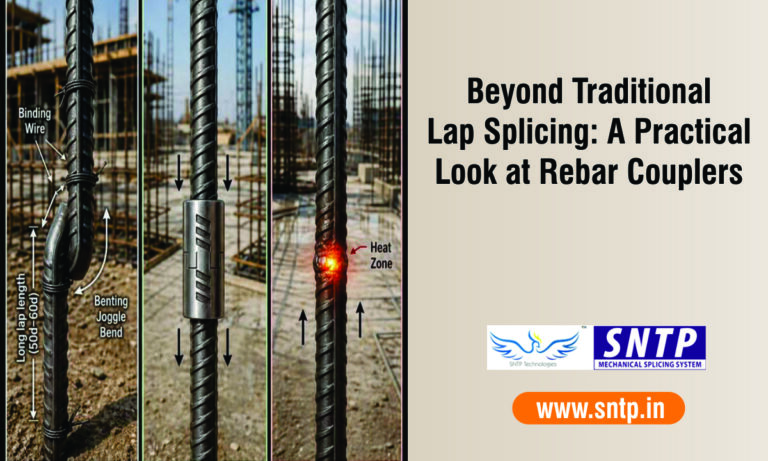
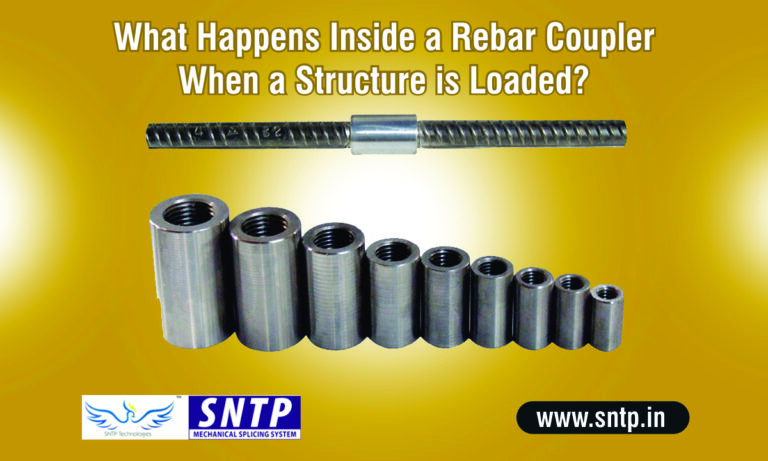
Rebar couplers are mechanical connectors designed to join two reinforcing bars end-to-end. Unlike traditional lap splicing, which requires bars to overlap over a specific length, couplers create a direct steel-to-steel connection. This method provides a continuous load path and ensures reliable force transfer throughout the structure.
Available in various designs, including threaded and position couplers, these systems are widely used in residential buildings, commercial projects, bridges, highways, metro systems, industrial facilities, and other infrastructure developments.
Their growing popularity is largely due to their ability to improve efficiency while maintaining high structural standards.
Reducing Steel Consumption
One of the most significant efficiency advantages of rebar couplers is their ability to reduce steel usage. Traditional lap splicing requires additional reinforcement bars to create overlap lengths. Depending on the project, these overlaps can account for a considerable amount of extra steel.
Rebar couplers eliminate the need for these overlaps by directly connecting the bars. This results in:
- Lower steel consumption
- Reduced material procurement costs
- Less transportation and handling
- Optimized reinforcement layouts
For large infrastructure projects involving thousands of reinforcement connections, the savings can be substantial. Reduced steel usage not only lowers project costs but also contributes to more sustainable construction practices.
Improving Construction Speed
Time is one of the most valuable resources in any construction project. Delays can increase costs, affect project schedules, and create operational challenges.
Rebar couplers simplify the reinforcement process by eliminating the need for lengthy overlap calculations and extensive tying work. Once the bar ends are prepared, workers can quickly connect them using the coupler.
This streamlined process offers several advantages:
- Faster reinforcement installation
- Reduced labor requirements
- Improved workflow coordination
- Quicker project completion
In high-rise buildings, bridges, and large-scale infrastructure projects, even small improvements in installation speed can significantly impact overall project timelines.
Minimizing Reinforcement Congestion
Reinforcement congestion is a common challenge in heavily loaded structural elements such as columns, beams, pile caps, and shear walls. Traditional lap splicing increases the number of bars within a confined area, making it difficult to place and compact concrete properly.
Excessive congestion can lead to:
- Poor concrete flow
- Inadequate compaction
- Honeycombing and voids
- Reduced structural quality
Rebar couplers eliminate overlap zones and create a more organized reinforcement layout. This allows concrete to flow freely around the reinforcement, ensuring better compaction and stronger structural performance.
The result is improved construction quality and fewer issues during inspection and testing.
Enhancing Structural Performance
Efficiency is not only about saving time and materials; it is also about achieving better performance with available resources.
Rebar couplers provide a direct mechanical connection between reinforcing bars, ensuring efficient load transfer. Unlike lap splicing, which depends on concrete bonding for force transmission, couplers create a continuous steel connection.
This improves:
- Tensile strength
- Load distribution
- Structural continuity
- Overall reliability
Many high-quality couplers are designed to match or exceed the strength of the parent reinforcement bar, making them suitable for demanding applications such as skyscrapers, bridges, and seismic-resistant structures.
Reducing Labor Requirements
Labor costs represent a significant portion of construction expenses. Traditional reinforcement methods often require extensive manual work, including measuring, cutting, overlapping, and tying bars.
Rebar couplers simplify these operations. Installation is generally faster and more straightforward, reducing the amount of labor needed to complete reinforcement work.
Benefits include:
- Lower labor costs
- Reduced dependency on highly specialized workers
- Improved productivity
- Consistent installation quality
These advantages are particularly valuable in regions where skilled labor shortages can impact project schedules and costs.
Supporting Sustainable Construction
Modern construction increasingly emphasizes sustainability and environmental responsibility. Rebar couplers contribute to these goals by helping projects use resources more efficiently.
Their environmental benefits include:
Reduced Material Usage
Less steel consumption means fewer raw materials are required for production.
Lower Carbon Emissions
Steel manufacturing is energy-intensive. By reducing steel demand, couplers help lower carbon emissions associated with production and transportation.
Reduced Construction Waste
Mechanical connections generate less waste compared to traditional overlapping methods.
Improved Lifecycle Performance
Strong and durable reinforcement connections extend the lifespan of structures, reducing future repair and replacement requirements.
These sustainability advantages align with green building initiatives and modern environmental standards.
Ideal for Large-Scale Infrastructure Projects
Infrastructure projects demand efficiency on a massive scale. Highways, bridges, tunnels, airports, and metro systems often involve thousands of reinforcement joints.
In these applications, rebar couplers offer significant advantages:
- Faster installation across large work areas
- Reduced reinforcement congestion
- Improved quality control
- Better long-term performance
Their ability to standardize reinforcement connections helps contractors maintain consistency throughout the project.
Supporting Modern Construction Techniques
The construction industry is rapidly adopting advanced technologies such as prefabrication, modular construction, and Building Information Modeling (BIM).
Rebar couplers integrate seamlessly with these modern approaches.
Precast Construction
Couplers facilitate quick and accurate connections between prefabricated concrete elements.
Modular Construction
Mechanical splicing supports efficient assembly of modular components.
Digital Construction Planning
Couplers simplify reinforcement detailing and improve coordination within BIM environments.
As construction becomes more technology-driven, the importance of efficient reinforcement solutions continues to grow.
Improving Quality Control
Consistency is essential in construction. Variations in workmanship can affect structural performance and project outcomes.
Rebar couplers improve quality control by providing standardized mechanical connections. Manufacturers subject couplers to rigorous testing for:
- Tensile strength
- Thread accuracy
- Material quality
- Durability
This controlled manufacturing process ensures reliable performance and reduces uncertainty during construction.
For engineers and project managers, this predictability translates into greater confidence in the finished structure.
The Future of Efficient Reinforcement
As urban development accelerates and infrastructure requirements expand, the need for efficient reinforcement solutions will continue to increase.
Future construction trends emphasize:
- Faster project delivery
- Reduced material consumption
- Sustainable building practices
- Enhanced structural performance
Rebar couplers align perfectly with these objectives. Their ability to optimize resources while improving quality makes them a valuable tool for modern construction professionals.
With ongoing advancements in manufacturing and engineering technology, rebar couplers are expected to play an even greater role in shaping the future of reinforced concrete construction.
Conclusion
Building more with less is a goal shared by every construction project. Rebar couplers make this possible by improving efficiency at every stage of the construction process. From reducing steel consumption and labor requirements to accelerating installation and enhancing structural performance, these mechanical connectors provide clear advantages over traditional lap splicing methods.
Their ability to support sustainability, improve quality control, and adapt to modern construction techniques has made them an essential component of contemporary reinforcement systems.
As the industry continues to evolve, rebar couplers will remain at the forefront of innovation, helping engineers, contractors, and developers create stronger, safer, and more efficient structures while making the most of available resources.
Recent Posts



© Copyright 2017.SNTP All Rights Reserved.
Design & Developed By Star Web Maker