+91 9953 65 9594


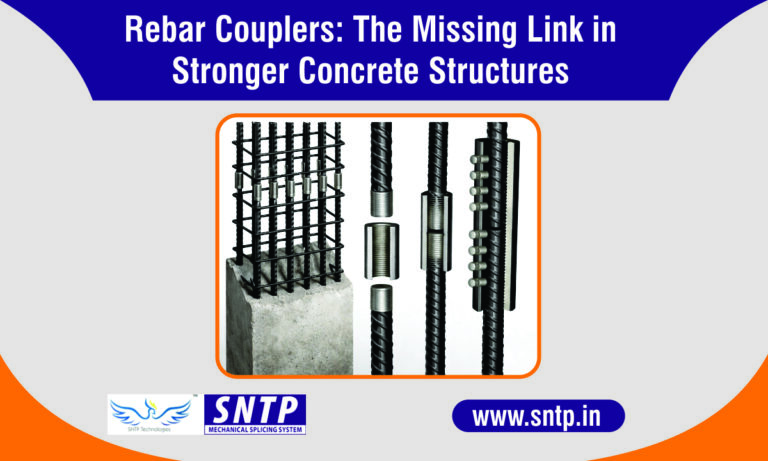
Rebar Couplers: The Missing Link in Stronger Concrete Structures
Concrete is one of the most widely used construction materials in the world. Its ability to withstand compressive forces makes it ideal for buildings, bridges, dams, highways, and countless other structures. However, concrete alone has a limitation—it is relatively weak in tension. To overcome this challenge, steel reinforcement bars, commonly known as rebars, are embedded within concrete to provide the tensile strength needed for structural stability.
While reinforcement bars play a crucial role in concrete construction, the method used to connect them is equally important. This is where Rebar couplers come into the picture. Often overlooked, these mechanical connectors serve as the missing link that helps create stronger, safer, and more efficient concrete structures. By providing reliable connections between reinforcing bars, rebar couplers are transforming modern construction practices and setting new standards for structural performance.
Understanding Rebar Couplers
A rebar coupler is a mechanical device used to connect two reinforcement bars end-to-end. Unlike traditional lap splicing, which requires overlapping rebars over a certain length, couplers create a direct steel-to-steel connection. This connection allows forces to transfer efficiently from one bar to another without relying on extended overlaps.
Rebar couplers are available in various designs, including threaded couplers, position couplers, transition couplers, and special-purpose couplers. These solutions are widely used in residential, commercial, industrial, and infrastructure projects where strong and dependable reinforcement connections are essential.
Why Strong Reinforcement Connections Matter
The strength of a reinforced concrete structure depends not only on the quality of concrete and steel but also on how effectively reinforcement bars are connected. Weak or inefficient connections can create vulnerable points within a structure, potentially affecting its ability to withstand loads over time.
In large and complex structures, reinforcement continuity is critical. Forces generated by loads, wind, seismic activity, and environmental conditions must travel smoothly through the reinforcement system. Rebar couplers help maintain this continuity by providing a secure mechanical connection that supports consistent load transfer.
By ensuring that reinforcement bars work together as a unified system, couplers contribute significantly to structural integrity and long-term durability.
Overcoming the Limitations of Lap Splicing
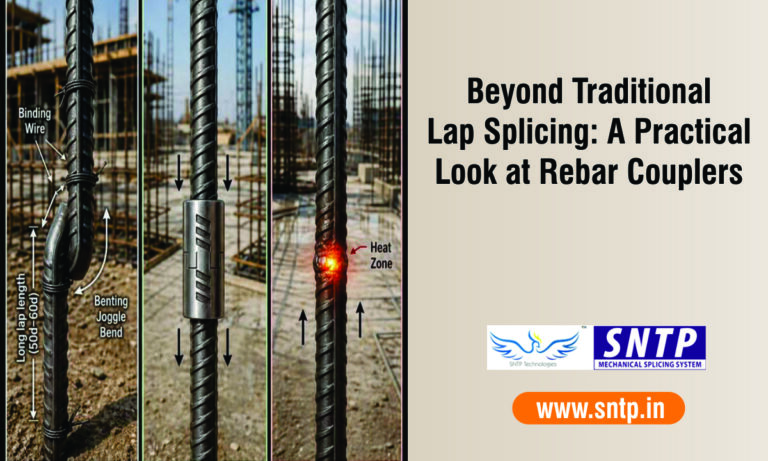
For decades, lap splicing has been the traditional method for joining reinforcement bars. This method involves overlapping two rebars for a specified distance so that forces can transfer through the surrounding concrete.
Although lap splicing is widely used, it presents several challenges:
- Increased steel consumption
- Reinforcement congestion
- Dependence on concrete quality
- Longer installation times
- Difficulty in heavily reinforced areas
As structures become taller and more complex, these limitations become more apparent. Rebar couplers address these issues by eliminating the need for lengthy overlaps and providing a more efficient reinforcement solution.
Enhancing Structural Strength
One of the primary benefits of rebar couplers is their ability to improve structural strength. Because they create a direct connection between reinforcement bars, couplers ensure efficient load transfer across joints.
High-quality couplers are engineered to meet or exceed the tensile strength of the parent rebar. This means the connection can perform as effectively as the reinforcement itself, even under demanding conditions.
The result is a stronger and more reliable reinforcement system capable of handling:
- Heavy structural loads
- Dynamic forces
- Repeated stress cycles
- Harsh environmental conditions
This enhanced strength is particularly valuable in high-rise buildings, bridges, tunnels, and industrial structures.
Reducing Reinforcement Congestion
Reinforcement congestion is a common challenge in modern construction. In heavily loaded structural elements such as columns, beams, shear walls, and pile caps, overlapping bars can create crowded reinforcement zones.
Excessive congestion can make it difficult for concrete to flow and compact properly, increasing the risk of defects such as honeycombing and voids.
Rebar couplers eliminate overlap lengths and create a more compact reinforcement layout. This provides additional space within the reinforcement cage, allowing for better concrete placement and improved structural quality.
Reduced congestion also simplifies inspection and quality control processes, contributing to more reliable construction outcomes.
Improving Construction Efficiency
Time is a critical factor in construction projects. Delays can increase costs and affect project schedules. Rebar couplers help improve efficiency by simplifying reinforcement installation.
Traditional lap splicing requires extensive measuring, overlapping, and tying of bars. In contrast, couplers provide a straightforward connection method that reduces labor requirements and installation time.
The efficiency advantages include:
- Faster reinforcement assembly
- Reduced labor costs
- Improved workflow management
- Quicker project completion
For large infrastructure projects and high-rise developments, these benefits can significantly enhance productivity.
Supporting Sustainable Construction
Sustainability is becoming increasingly important in the construction industry. Builders and developers are looking for ways to reduce environmental impact while maintaining structural performance.
Rebar couplers contribute to sustainable construction by reducing steel consumption. Since overlap lengths are eliminated, less reinforcement material is required throughout the project.
This results in:
- Lower steel production demand
- Reduced carbon emissions
- Less construction waste
- Improved resource efficiency
By optimizing material usage and extending structural lifespan, rebar couplers support environmentally responsible building practices.
Applications Across Modern Construction
The versatility of rebar couplers makes them suitable for a wide variety of construction projects. Their use continues to expand across different sectors, including:
High-Rise Buildings
Tall structures require strong and reliable reinforcement connections to support vertical and lateral loads. Couplers help reduce congestion in core walls and columns while ensuring structural continuity.
Bridges and Flyovers
Transportation infrastructure is exposed to heavy traffic loads and environmental stress. Rebar couplers provide durable connections that improve long-term performance.
Metro and Railway Projects
Large-scale transportation networks require efficient reinforcement solutions that support rapid construction and high structural reliability.
Industrial Facilities
Factories, warehouses, and power plants often involve heavily reinforced concrete elements. Couplers simplify reinforcement layouts and improve structural strength.
Dams and Water Structures
Water-retaining structures demand exceptional durability and reliability. Mechanical couplers help ensure reinforcement continuity in critical areas.
Improving Safety and Reliability
Construction safety is influenced by both design and installation practices. Rebar couplers improve site safety by reducing the complexity of reinforcement work and minimizing congestion.
Their standardized design also enhances quality control. Manufacturers typically conduct rigorous testing to verify:
- Tensile strength
- Thread accuracy
- Material quality
- Durability under load
These testing procedures ensure that couplers perform consistently and meet project specifications.
For engineers and project managers, this reliability provides confidence that reinforcement connections will perform as intended throughout the structure's service life.
The Future of Reinforcement Technology
The construction industry continues to embrace innovation and advanced engineering solutions. Digital design tools, prefabrication techniques, and smart construction practices are becoming increasingly common.
Rebar couplers align perfectly with these modern trends. Their precision, efficiency, and compatibility with advanced construction methods make them an essential component of future-ready infrastructure.
As demand grows for stronger, more sustainable, and more efficient structures, the role of mechanical reinforcement connections will continue to expand.
Conclusion
Rebar couplers have emerged as the missing link in stronger concrete structures. By providing direct steel-to-steel connections, they overcome many of the limitations associated with traditional lap splicing and deliver significant advantages in strength, efficiency, and sustainability.
From reducing reinforcement congestion and improving load transfer to accelerating construction and minimizing material waste, rebar couplers offer a comprehensive solution for modern construction challenges.
As the industry continues to evolve, these innovative connectors will play an increasingly important role in shaping the future of reinforced concrete construction. For engineers, contractors, and developers seeking stronger and more reliable structures, rebar couplers are no longer just an option—they are an essential part of building smarter, safer, and more durable infrastructure.
Recent Posts



© Copyright 2017.SNTP All Rights Reserved.
Design & Developed By Star Web Maker