+91 9953 65 9594


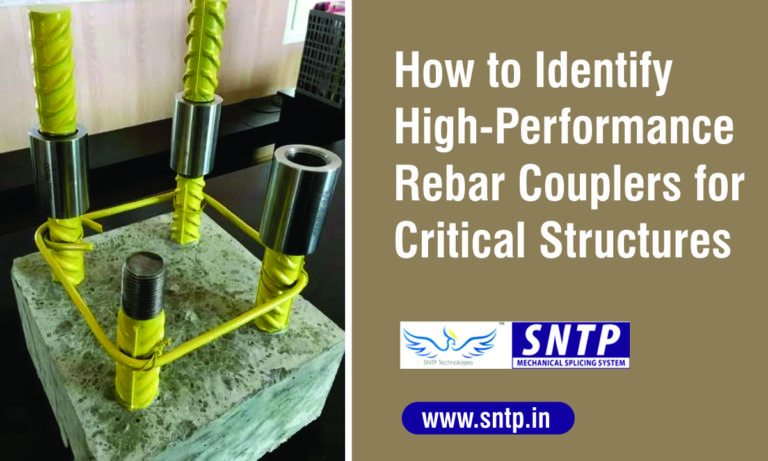
How to Identify High-Performance Rebar Couplers for Critical Structures
In modern construction, Rebar couplers play a crucial role in ensuring the strength, durability, and safety of reinforced concrete structures. From high-rise buildings and bridges to metro systems and industrial plants, mechanical splicing has become a preferred alternative to traditional lap splicing. However, not all couplers deliver the same level of performance.
When working on critical structures, choosing the right rebar coupler is extremely important. A poor-quality coupler can compromise load transfer, reduce structural reliability, and increase the risk of failure under stress. On the other hand, high-performance rebar couplers provide strong mechanical continuity, better fatigue resistance, and long-term structural stability.
This article explains how to identify high-performance rebar couplers for critical structures and what factors engineers, contractors, and project managers should evaluate before making a selection.
Why High-Performance Rebar Couplers Matter
Critical structures are exposed to:
- Heavy loads
- Dynamic forces
- Seismic activity
- Vibrations
- Long service life requirements
Examples include:
- High-rise towers
- Bridges and flyovers
- Metro and tunnel projects
- Industrial foundations
- Power plants
- Offshore structures
In these applications, reinforcement joints must perform consistently under demanding conditions. High-performance rebar couplers ensure:
- Reliable load transfer
- Strong tensile performance
- Reduced risk of slippage
- Better structural integrity
Key Features of High-Performance Rebar Couplers
1. Compliance with Industry Standards
One of the first indicators of quality is compliance with recognized standards.
Reliable couplers should meet:
- IS 16172
- ASTM standards
- BS standards
- International mechanical splicing specifications
Certified products undergo testing for:
- Tensile strength
- Fatigue resistance
- Slip performance
- Ductility
Always ask for:
- Test certificates
- Compliance reports
- Third-party inspection documents
Standards ensure the coupler can perform safely in critical structures.
2. Full Bar Strength Capability
A high-performance rebar coupler should develop strength equal to or greater than the connected rebar.
This means:
- The bar should fail before the coupler fails
- The connection should maintain full load continuity
If the coupler becomes the weak point, structural safety is compromised.
How to Verify:
Check tensile test reports to confirm:
- Ultimate tensile strength
- Yield strength compatibility
- Failure mode results
3. Precision Manufacturing Quality
Manufacturing accuracy directly affects coupler performance.
High-quality couplers have:
- Uniform internal threading
- Accurate dimensions
- Smooth machining
- Proper concentricity
Poorly manufactured couplers may cause:
- Misalignment
- Uneven load distribution
- Thread damage
- Installation difficulties
Precision manufacturing ensures consistent performance across every joint.
4. High-Grade Raw Material
The material used in coupler manufacturing greatly impacts strength and durability.
Premium couplers are usually made from:
- High-grade alloy steel
- Carbon steel with controlled composition
- Heat-treated materials for improved toughness
Low-grade materials may crack or deform under heavy stress.
Signs of Good Material Quality:
- Consistent finish
- Proper hardness
- Corrosion resistance
- No visible casting defects
5. Strong Fatigue and Cyclic Load Performance
Critical structures often experience repeated loading caused by:
- Traffic movement
- Wind forces
- Machinery vibration
- Earthquakes
A high-performance coupler should resist fatigue and maintain joint integrity over time.
Important Tests Include:
- Cyclic loading tests
- Fatigue resistance tests
- Repeated tension-compression testing
Couplers with excellent fatigue performance are especially important in seismic zones and bridge structures.
6. Low Slip Performance
Slip refers to the movement between rebars inside the coupler under load.
Excessive slip can:
- Reduce stiffness
- Cause cracking
- Affect structural stability
High-performance couplers are designed to minimize slip and maintain strong reinforcement continuity.
What to Check:
- Slip test results
- Mechanical locking efficiency
- Installation guidelines for proper engagement
7. Easy and Reliable Installation
Even the best coupler can fail if installation is difficult or inconsistent.
A quality rebar coupler should:
- Be easy to align
- Allow proper thread engagement
- Support fast installation
- Reduce chances of human error
Some advanced systems include:
- Position indicators
- Torque-controlled mechanisms
- Shear bolt technology
These features improve installation accuracy on busy construction sites.
8. Corrosion Resistance
Critical structures often operate in harsh environments such as:
- Coastal areas
- Underground basements
- Industrial plants
- High-moisture zones
Corrosion-resistant couplers offer better long-term durability.
Features to Look For:
- Protective coatings
- Galvanized finishes
- Corrosion-tested materials
This is especially important for structures with long service life expectations.
9. Proven Track Record in Large Projects
One of the best ways to evaluate coupler quality is by reviewing past project usage.
Reliable manufacturers often supply couplers for:
- Infrastructure megaprojects
- Government construction works
- High-rise commercial towers
- Industrial developments
A proven track record demonstrates:
- Market trust
- Real-world performance
- Consistent quality standards
10. Availability of Technical Support
High-performance products should come with strong technical support from the manufacturer.
Good suppliers provide:
- Installation guidance
- Training for workers
- Site inspection support
- Technical documentation
This reduces installation errors and improves project quality.
Warning Signs of Low-Quality Rebar Couplers
Avoid couplers that show:
- Inconsistent threading
- Poor finishing
- Lack of certifications
- Visible cracks or defects
- No testing documentation
- Extremely low pricing without quality proof
Cheap couplers may save money initially but can create serious structural risks later.
Questions to Ask Before Buying Rebar Couplers
Before finalizing a supplier, ask:
- Does the coupler meet IS or international standards?
- Are third-party test reports available?
- What is the tensile strength performance?
- Has the product been used in major projects?
- What quality control processes are followed?
- Is installation training provided?
- What type of steel is used in manufacturing?
These questions help ensure you select a reliable product.
Why High-Performance Couplers Are Essential for the Future
Modern construction is moving toward:
- Taller buildings
- Heavier structures
- Faster project execution
- Performance-based engineering
In this environment, reinforcement joints must deliver:
- Reliability
- Safety
- Durability
- Long-term efficiency
High-performance rebar couplers meet these demands far better than outdated reinforcement connection methods.
Conclusion
Identifying high-performance rebar couplers is essential for ensuring the safety and durability of critical RCC structures. The right coupler should offer full bar strength, precise manufacturing, fatigue resistance, low slip performance, and compliance with recognized standards.
For engineers, contractors, and project owners, selecting quality couplers is not just about meeting specifications—it is about protecting the long-term integrity of the structure itself.
As infrastructure projects continue to grow in scale and complexity, high-performance rebar couplers will remain a key component of strong, efficient, and future-ready construction practices.
Recent Posts


© Copyright 2017.SNTP All Rights Reserved.
Design & Developed By Star Web Maker