+91 9953 65 9594


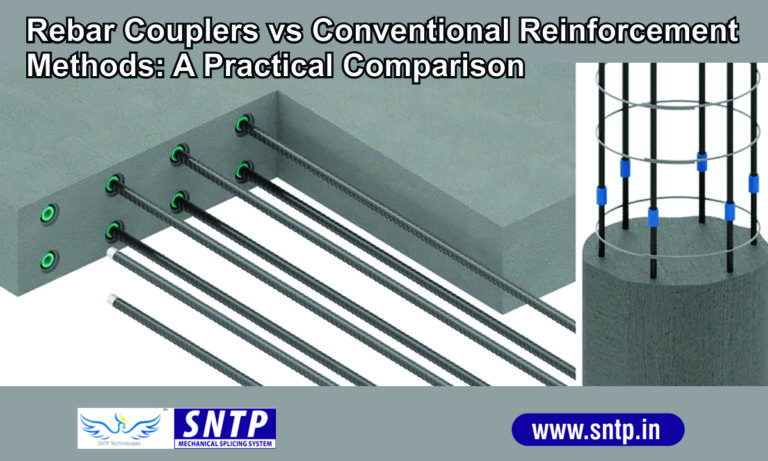
Rebar Couplers vs Conventional Reinforcement Methods: A Practical Comparison
Reinforced concrete is the foundation of modern construction, providing the strength and stability needed for residential buildings, commercial complexes, bridges, highways, and industrial structures. One of the most important aspects of reinforced concrete is the method used to connect reinforcing bars. For many years, conventional reinforcement methods, particularly lap splicing, have been widely used. However, with the increasing demand for faster, stronger, and more efficient construction, Rebar couplers have become the preferred alternative.
Choosing the right reinforcement connection method can significantly affect a project's cost, quality, durability, and completion time. Understanding the differences between rebar couplers and conventional reinforcement methods helps engineers, contractors, and project managers make informed decisions.
Understanding Conventional Reinforcement Methods
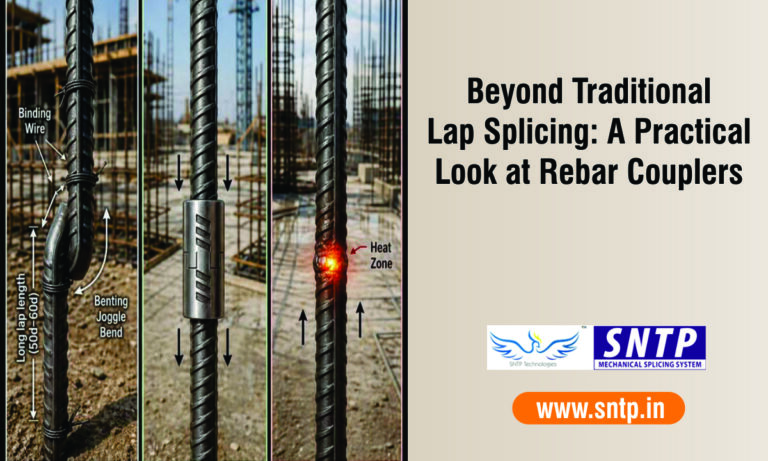
Traditional reinforcement connections are typically made using lap splicing, where two reinforcing bars overlap for a specified length. The load is transferred from one bar to the other through the surrounding concrete.
This method has been used for decades because it is simple and does not require specialized equipment. However, as construction projects have become larger and more technically demanding, several limitations of lap splicing have become evident.
Common challenges include:
- Higher steel consumption
- Reinforcement congestion
- Increased labor requirements
- Longer construction time
- Dependence on concrete quality for load transfer
Although lap splicing remains suitable for certain small-scale projects, it is often less efficient for modern infrastructure and high-rise construction.
What Are Rebar Couplers?
Rebar couplers are mechanical connectors designed to join two reinforcement bars end-to-end. Instead of relying on overlapping steel and concrete bonding, they create a direct steel-to-steel connection.
Available in threaded, position, and transition designs, rebar couplers provide a reliable and consistent reinforcement solution. They are widely used in residential, commercial, industrial, and infrastructure projects where structural performance and construction efficiency are priorities.
Steel Consumption
One of the biggest differences between the two methods is the amount of steel required.
Conventional lap splicing requires additional reinforcement to create overlap lengths. Depending on the bar diameter and design specifications, these overlaps can significantly increase steel usage across an entire project.
Rebar couplers eliminate overlap lengths by connecting bars directly. This allows engineers to reduce reinforcement quantities while maintaining structural strength.
Less steel means:
- Lower material costs
- Easier transportation
- Reduced storage requirements
- Better resource utilization
For large projects with thousands of reinforcement joints, these savings become highly significant.
Structural Performance
Structural performance is one of the most important considerations when selecting a reinforcement connection system.
In lap splicing, load transfer depends on the bond between reinforcement bars and concrete. If concrete quality, placement, or compaction is not ideal, the effectiveness of the connection may be affected.
Rebar couplers create a mechanical steel-to-steel connection that provides more consistent load transfer.
Their advantages include:
- Higher tensile strength
- Better load distribution
- Continuous reinforcement
- Reliable performance under heavy loads
High-quality couplers are designed to match or exceed the strength of the reinforcement bars themselves, making them suitable for demanding structural applications.
Construction Speed
Project timelines are becoming increasingly important in modern construction.
Traditional lap splicing involves measuring overlap lengths, positioning bars accurately, and tying reinforcement together. This process requires considerable labor and time.
Rebar couplers simplify installation.
After preparing the bar ends, workers can quickly connect the reinforcement using mechanical couplers. This reduces installation time and improves overall productivity.
The result is:
- Faster reinforcement work
- Reduced labor hours
- Better project scheduling
- Earlier project completion
Time savings become particularly valuable in commercial developments and infrastructure projects with strict deadlines.
Reinforcement Congestion
Reinforcement congestion is another area where the two methods differ significantly.
Lap splicing increases the number of reinforcement bars in structural elements such as columns, beams, and shear walls. This congestion makes concrete placement more difficult and increases the likelihood of poor compaction.
Rebar couplers eliminate overlap zones, creating more space between reinforcement bars.
Benefits include:
- Better concrete flow
- Improved compaction
- Reduced honeycombing
- Higher construction quality
Reduced congestion also makes reinforcement inspection easier before concrete pouring.
Labor Requirements
Traditional reinforcement methods involve more manual work, including measuring, overlapping, aligning, and tying reinforcement bars.
These activities require skilled labor and increase construction costs.
Rebar couplers simplify installation, allowing workers to complete reinforcement connections more efficiently.
Advantages include:
- Lower labor costs
- Faster installation
- Reduced human error
- Improved consistency
This makes couplers particularly valuable in regions where skilled labor availability is limited.
Material Waste
Construction waste is both an environmental and financial concern.
Lap splicing often results in excess reinforcement material due to overlap requirements.
Mechanical couplers optimize reinforcement usage, reducing unnecessary steel consumption and minimizing waste generation.
Lower material waste contributes to:
- Better project efficiency
- Lower disposal costs
- More sustainable construction practices
Safety on Construction Sites
Construction safety improves when work becomes simpler and more organized.
Congested reinforcement areas created by lap splicing can make movement difficult for workers.
Rebar couplers reduce congestion and simplify reinforcement layouts, improving accessibility during installation.
Simplified reinforcement systems also reduce installation mistakes that could affect structural performance.
Cost Comparison
At first glance, traditional lap splicing may appear less expensive because it does not require mechanical connectors.
However, overall project costs tell a different story.
While rebar couplers involve an initial investment, they generate savings through:
- Reduced steel usage
- Lower labor costs
- Faster project completion
- Improved construction quality
- Reduced maintenance requirements
Over the life of a project, these combined savings often outweigh the initial cost of the couplers.
Suitability for Modern Construction
Today's construction projects demand greater precision and efficiency than ever before.
Rebar couplers are particularly suitable for:
- High-rise buildings
- Bridges
- Metro rail systems
- Airports
- Industrial plants
- Dams
- Tunnels
- Precast construction
- Modular buildings
Their ability to support modern construction techniques makes them a preferred reinforcement solution for engineers worldwide.
Sustainability Benefits
Environmental sustainability has become a major focus across the construction industry.
Compared to traditional reinforcement methods, rebar couplers contribute to greener construction by:
- Reducing steel consumption
- Lowering carbon emissions
- Minimizing construction waste
- Supporting efficient resource utilization
- Extending structural lifespan
These benefits align with sustainable building practices and modern infrastructure goals.
Which Method Is Better?
Both reinforcement methods have their place in construction.
Conventional lap splicing remains suitable for smaller projects where reinforcement congestion and material optimization are less critical.
However, for medium and large-scale construction projects, rebar couplers offer clear advantages.
They provide:
- Stronger reinforcement connections
- Faster installation
- Better structural performance
- Reduced material usage
- Lower long-term costs
- Improved sustainability
As construction standards continue to evolve, more engineers and contractors are choosing mechanical couplers to achieve better project outcomes.
Conclusion
The comparison between rebar couplers and conventional reinforcement methods clearly highlights the advantages of mechanical splicing in modern construction. While lap splicing has been a dependable solution for many years, it cannot always meet the demands of today's complex and fast-paced projects.
Rebar couplers provide a practical, efficient, and reliable alternative by improving structural strength, reducing steel consumption, minimizing reinforcement congestion, and accelerating construction. They also support sustainable building practices by optimizing material usage and reducing waste.
For engineers, contractors, and developers seeking higher quality, greater efficiency, and long-term value, rebar couplers have become the smarter choice. As construction technology continues to advance, mechanical reinforcement connections will play an even greater role in building stronger, safer, and more durable structures for the future.
Recent Posts



© Copyright 2017.SNTP All Rights Reserved.
Design & Developed By Star Web Maker