+91 9953 65 9594


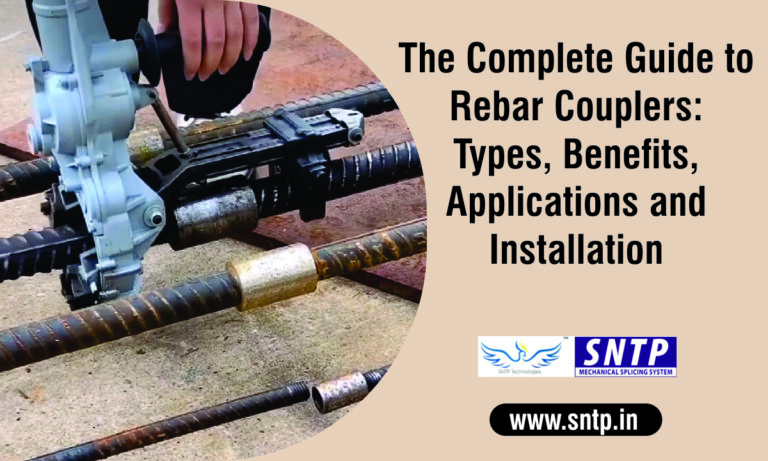
The Complete Guide to Rebar Couplers: Types, Benefits, Applications, and Installation
Reinforced concrete is the backbone of modern construction, providing the strength and durability needed for buildings, bridges, highways, and large infrastructure projects. One of the most important aspects of reinforced concrete construction is creating strong and reliable connections between reinforcement bars. Traditionally, lap splicing was the most common method for joining rebars. However, as construction projects have become more demanding, Rebar couplers have emerged as a more efficient and dependable solution.
Rebar couplers create a mechanical connection between two reinforcement bars, ensuring excellent load transfer while reducing steel wastage and reinforcement congestion. Today, they are widely used in high-rise buildings, bridges, tunnels, industrial facilities, and other critical structures.
This complete guide explains the types, benefits, applications, and installation process of rebar couplers.
What Are Rebar Couplers?
Rebar couplers are mechanical connectors designed to join two reinforcing bars together without requiring long lap lengths. They provide a direct steel-to-steel connection that allows forces to pass efficiently from one bar to another.
Unlike traditional lap splices, which rely on the bond between steel and concrete, rebar couplers create a secure mechanical joint. This makes them an ideal choice for projects where strength, space, and construction efficiency are important.
Mechanical splicing is increasingly being adopted because it improves structural performance while simplifying reinforcement work.
Types of Rebar Couplers
Different construction projects require different types of rebar couplers. Choosing the correct type depends on structural design, reinforcement arrangement, and site conditions.
1. Threaded Rebar Couplers
Threaded couplers are among the most commonly used mechanical splices. The ends of the reinforcement bars are threaded and screwed into the coupler to create a secure connection.
Key features:
- High tensile strength
- Reliable load transfer
- Easy installation
- Suitable for new construction projects
These couplers are widely used in commercial buildings, bridges, and industrial structures.
2. Bolted Rebar Couplers
Bolted couplers are designed for situations where threading the reinforcement bar is not possible.
Instead of threads, they use high-strength bolts that grip the reinforcement securely.
Advantages include:
- Quick installation
- No threading required
- Ideal for repair and retrofitting
- Suitable for congested reinforcement areas
They are frequently used in renovation projects and structural modifications.
3. Position Rebar Couplers
Position couplers are used when neither reinforcement bar can be rotated during installation.
They allow bars to be connected in confined spaces where conventional threaded couplers cannot be installed easily.
4. Transition Rebar Couplers
Transition couplers connect reinforcement bars of different diameters.
These couplers are useful when:
- Structural design changes
- Bar sizes vary between sections
- Existing structures require strengthening
5. Weldable Rebar Couplers
These couplers combine mechanical splicing with welding applications.
They are mainly used where reinforcement needs to connect with steel plates or structural steel members.
Benefits of Rebar Couplers
Rebar couplers offer several advantages over traditional reinforcement joining methods.
Improved Structural Strength
Mechanical couplers provide direct steel-to-steel load transfer, resulting in stronger reinforcement continuity.
This improves:
- Tensile performance
- Compressive strength
- Structural reliability
Reduced Steel Wastage
Lap splicing requires additional reinforcement length, increasing steel consumption.
Rebar couplers eliminate long overlap lengths, helping projects:
- Save steel
- Reduce material costs
- Minimise waste
Less Reinforcement Congestion
Heavy reinforcement can make concrete placement difficult.
Couplers reduce congestion by:
- Eliminating lap lengths
- Improving concrete flow
- Making vibration easier
- Reducing honeycombing
Faster Construction
Rebar couplers simplify reinforcement installation.
Benefits include:
- Faster reinforcement fixing
- Improved project scheduling
- Reduced labour time
- Better site productivity
Better Performance in Critical Structures
Mechanical splicing performs exceptionally well in:
- High-rise buildings
- Bridges
- Metro projects
- Earthquake-resistant structures
- Heavy industrial facilities
Applications of Rebar Couplers
Modern construction relies on rebar couplers in a wide range of projects.
High-Rise Buildings
Tall buildings require strong reinforcement continuity and efficient construction methods.
Rebar couplers help:
- Reduce congestion
- Improve structural performance
- Speed up floor construction cycles
Bridges and Flyovers
Bridge structures experience heavy traffic loads and continuous vibration.
Mechanical couplers provide:
- Reliable load transfer
- High fatigue resistance
- Long-term durability
Metro and Tunnel Projects
Underground construction often involves restricted working space.
Rebar couplers simplify reinforcement installation while maintaining structural integrity.
Industrial Structures
Factories, power plants, warehouses, and heavy industrial facilities require reinforcement capable of carrying significant loads.
Mechanical couplers help meet these demanding requirements.
Infrastructure Projects
Large infrastructure developments such as:
- Airports
- Dams
- Marine structures
- Water treatment plants
commonly use rebar couplers to improve construction quality and efficiency.
Installation Process of Rebar Couplers
Proper installation is essential for achieving maximum performance.
Step 1: Inspect the Reinforcement Bars
Before installation:
- Check bar diameter
- Ensure straight alignment
- Remove dirt, rust, oil, or debris
Clean bars improve connection quality.
Step 2: Prepare the Bars
Depending on the coupler type:
- Thread the reinforcement bars
- Cut square ends where required
- Verify thread accuracy
Preparation should follow the manufacturer's recommendations.
Step 3: Install the Coupler
Insert or screw the reinforcement bars into the coupler according to the specified installation method.
For bolted couplers:
- Insert bars fully
- Tighten bolts to the recommended torque
For threaded couplers:
- Ensure full thread engagement
Step 4: Verify Alignment
The reinforcement bars should remain properly aligned.
Misalignment can:
- Reduce joint performance
- Create uneven load distribution
- Increase installation errors
Step 5: Perform Quality Inspection
Before concrete placement:
- Check installation depth
- Verify tightening
- Inspect threads or bolts
- Confirm compliance with project requirements
Quality checks help ensure reliable structural performance.
Factors to Consider When Selecting Rebar Couplers
Choosing the right rebar coupler depends on several factors.
Consider:
- Reinforcement bar size
- Load requirements
- Structural design
- Installation method
- Project specifications
- Compliance with relevant standards
- Manufacturer's quality assurance
- Availability of technical support
Selecting certified products from an experienced manufacturer improves long-term performance and project safety.
Why Rebar Couplers Are the Future of RCC Construction
Construction is becoming more complex every year. Taller buildings, larger infrastructure projects, and stricter quality standards require reinforcement systems that deliver consistent performance.
Rebar couplers support these changing demands by offering:
- Better structural continuity
- Faster construction
- Reduced steel consumption
- Improved safety
- Higher construction quality
Their ability to simplify reinforcement while maintaining exceptional strength makes them an essential component of modern reinforced concrete construction.
Conclusion
Rebar couplers have transformed the way reinforcement bars are connected in RCC structures. Compared with traditional lap splicing, they provide stronger mechanical connections, reduce reinforcement congestion, improve construction speed, and minimise steel wastage.
Available in different types—including threaded, bolted, position, transition, and weldable couplers—they can be selected to suit a wide range of construction requirements. Whether used in high-rise buildings, bridges, tunnels, industrial plants, or major infrastructure projects, rebar couplers enhance structural reliability and construction efficiency.
As the construction industry continues to embrace modern engineering practices, rebar couplers will remain a key technology for building safer, stronger, and more durable reinforced concrete structures.
Recent Posts



© Copyright 2017.SNTP All Rights Reserved.
Design & Developed By Star Web Maker